Ciclos de Arte y Salud Mental is an ongoing participatory programme developed by Valentina Gaia Lops that operates at the intersection of artistic practice, mental health and collective inquiry. Conceived as a sustained framework rather than a discrete project, the cycles bring together participants with diverse relationships to mental health — including lived experience, professional practice and social engagement — to explore how these realities are shaped, mediated and contested.
The programme unfolds through regular encounters structured around artistic processes, where drawing, writing, movement and conversation function as tools for reflection and shared production. Within this context, art is mobilised as a situated methodology that enables forms of knowledge to emerge through experience, relation and embodied practice.
Ciclos de Arte y Salud Mental is intrinsically connected to El Informe, a long-term artistic research project that investigates the dispositifs, languages and institutional structures that define mental health. The cycles operate as both a generative and reflexive space within this research, where collective sessions produce materials, testimonies and gestures that inform and expand the installation and its evolving archive.
Rather than aiming at fixed outcomes, the programme foregrounds process, continuity and the conditions that allow for collective thinking. Through its ongoing structure, it sustains a space where artistic practice becomes a means to engage critically with the social, political and institutional dimensions of mental health.
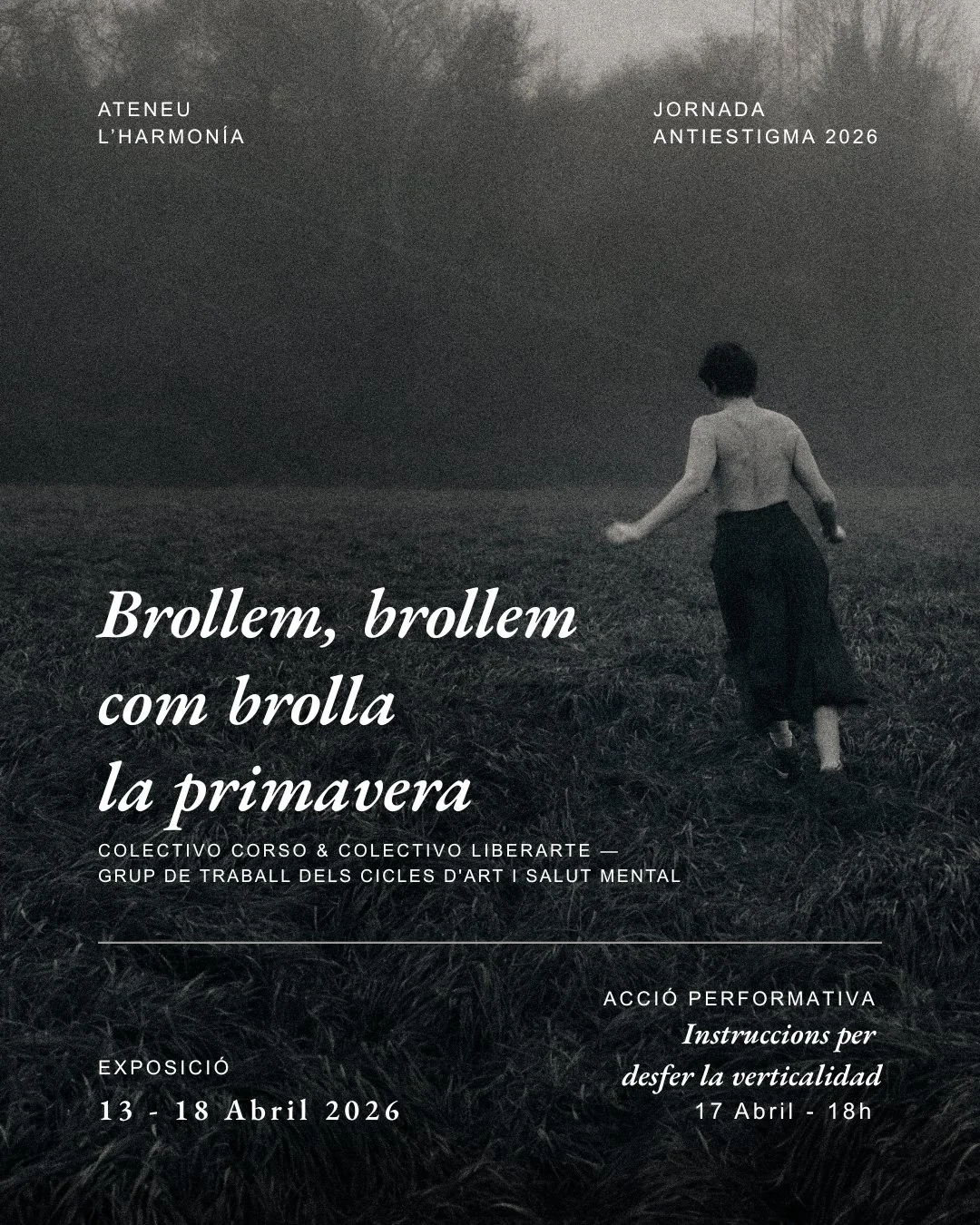
Instructions for Undoing Verticality / Instruccions per desfer la verticalitat
Recinto de la Fabra i Coats, Barcelona
Within the framework of the Anti-Stigma Programme, 2026
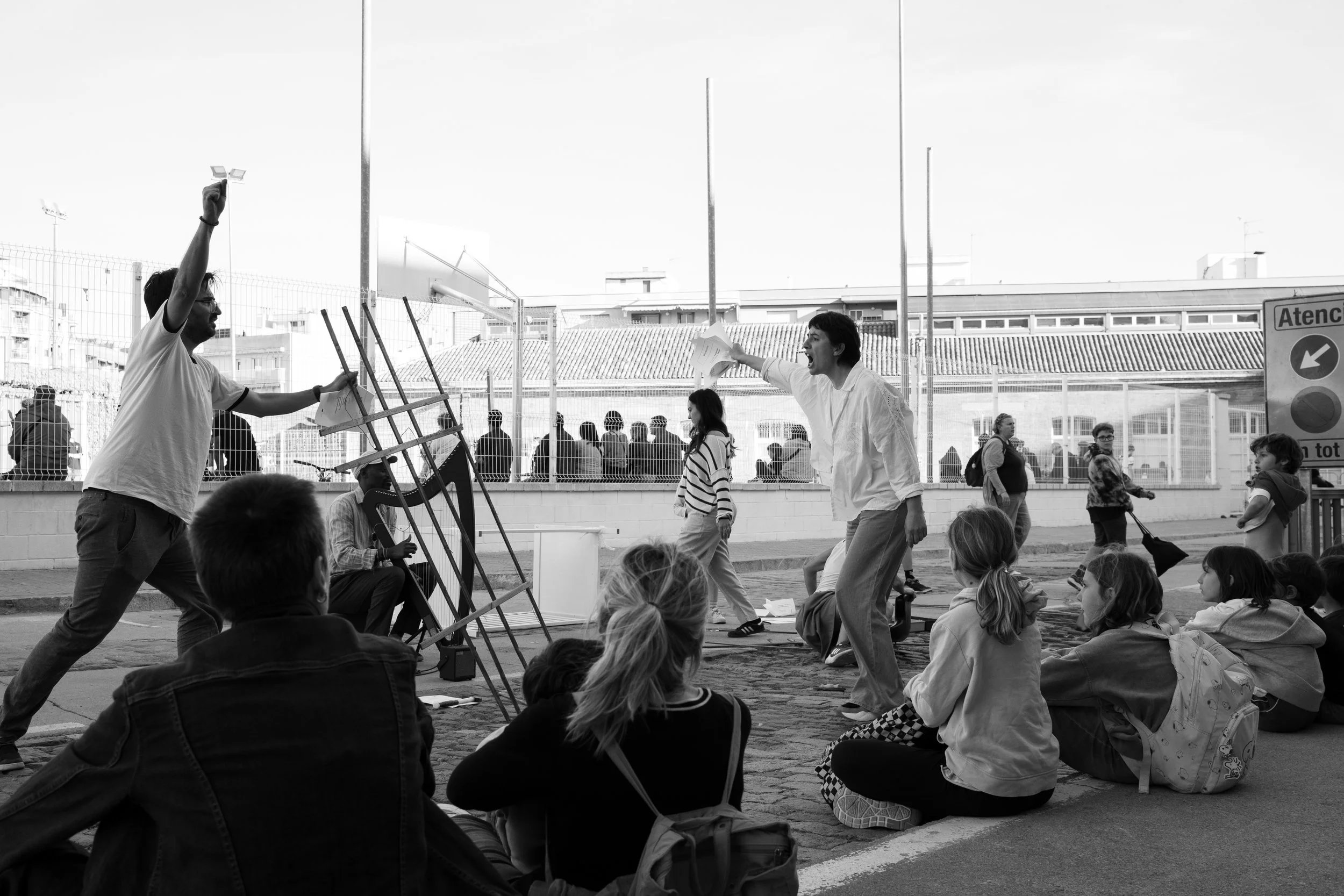
Instructions for Undoing Verticality unfolds as a participatory performance action developed within the Art & Mental Health Cycles, where the group explores how structures of power take shape in and through the body within psychiatric and mental health systems. Centered around a vertical structure-object, the work engages gestures of dismantling, displacing and reconfiguring its form, activating a shared inquiry into how verticality is embodied and sustained. The action opens into public participation, extending the process beyond the group itself.
Emerging from a process of collective reflection and guided artistic research, the work does not seek to represent these structures, but to intervene in them through action. Alongside it, a manual of instructions—developed through the process and articulated from within it—accompanies and extends the work, offering a set of open prompts for engaging with and undoing verticality beyond the immediate context of the piece.